Ich bin ein Berliner!
- Delaney Hanon
- Oct 30, 2025
- 5 min read

October 16-19
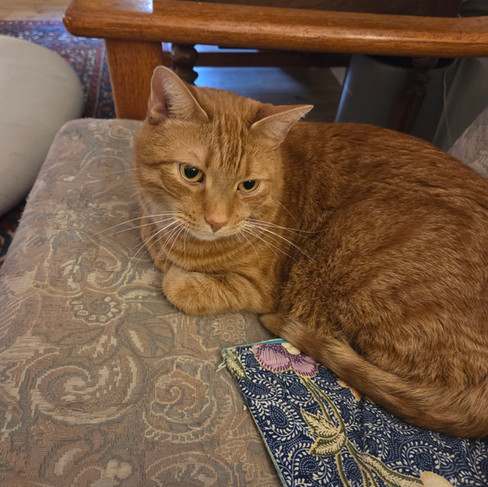
We got off our bus from Prague just as it was getting dark in Berlin. As we walked into the train station, I was relieved to find myself stumbling through German again--I could understand the signs! I could read the UBahn map! We were able to easily find the train we needed to take us to the lock box to pick up the key to the apartment where we were staying, which was conveniently just one more stop away on the train. Thanks to a thorough photo-guide from our Trusted Housesitters host, we found the apartment easily and were greeted by our feline friends for the week, Norman (orange) and Banana (blackish). We got take out from a Thai place down the road and settled in for our first night with the kitties.



The next morning I walked to the grocery store down the street to pick up some essentials for our stay. As I perused the aisles, a familiar banjo riff started playing over the store speakers--they were playing "Live and Die" by my favorite band, The Avett Brothers! I don't even hear them on the radio back home! It was an incredible moment of Kismet that immediately made me feel at home.

We were staying pretty far from the city center, but only a 5 minute walk from the nearest UBahn, which made getting around a breeze. We took a train to the Brandenburg Gate and did our favorite introduction to a new city--a Rick Steves Audio Tour! This was both of our first times in Berlin, and it immediately struck me how much 20th century history was right at my fingertips. From WWII to the Berlin Wall, I was able to see the places so many events I teach happened, only a few blocks from each other. Naturally, I took hundreds of pictures and videos, which I have already added to slides with my notes so I can remember everything when I return to the classroom. This first tour took us by the Reichstag, the Brandenburg Gate, the Memorial to the Murdered Jews of Europe, the site of Hitler's bunker (now a parking lot), the University, Museum Island, and Alexanderplatz.


One of the most striking parts of this tour was how boldly and intentionally Berlin commemorates its past. Outside the Reichstag there is a memorial to the members of government who stood up to Hitler's rise--and who lost their lives for it. As you walk to the Brandenburg Gate, you pass a memorial to those who lost their lives trying to cross the Berlin Wall, and you can see the place where the wall stood marked on the pavement. The Memorial to the Murdered Jews of Europe takes up an entire city block, and as you walk through you sink below the surface, finding yourself surrounded on all sides by the stones that resembles graves. In Babelplatz, a square across from Humboldt University, surrounded by the Opera and State Library, you come upon a window in the ground. This is the "Empty Library," which marks the place where Nazis burned books. Each of these moving monuments struck me viscerally--not only as memorials to horrific moments in the past, but also as chilling reminders of what can come when we aren't vigilant against authoritarian regimes.


During our tour we stopped for a couple of Berlin specialties. First up was Currywurst--sausage with curried ketchup. Sounds weird, tastes great--it was the perfect mid-walk snack to keep us going. At the end of our tour we journeyed to the famous Prater Biergarten, which is hugely popular in the summer months but less-so in October. Despite the cold, we both got giant .5 L steins (because when in Germany), and froze our fingers off playing cribbage.


The next morning we set out to do a second Rick Steves audio tour, this one taking us to a neighborhood known as Prenzlauer Berg. This is a true neighborhood of Berlin, and since it was Saturday we got to see many of the residents out and about enjoying the beautiful fall weather. We stumbled into a farmer's market in one of the streets, and walked through multiple parks filled with families. Along the way we also went into the "Everyday Life in the DDR" museum, which did an incredible job telling the story of life in East Germany. I took pictures of nearly every sign and exhibit for my students, as these kinds of details are often what they have questions about. ("What do you mean they didn't have the same kinds of products?" "How did they get people to work if everyone was paid the same?" "Did they have TV?")


The walk also took us by Konnopke's Imbiss, the stand that claims to have served the first Currywurst in East Berlin. Amazingly, this stand has been continuously owned and operated by the same family since 1930, surviving the East German years in the same location under the tracks. During the days behind the wall, this stand became a place East Berliner's could go and socialize. The fare was cheap and something they could afford with their limited pocket cash. Anthony Bourdain visited this stand on an episode of "No Reservations" that we watched several months ago in anticipation of our trip, and I am happy to report that the stand deserves its reputation as "every Berliner's favorite wurstelstand." I stuck with the regional fav, the currywurst with fries, while Cal tried the bratwurst and potato salad.


From here, the walk continued past the Prater Biergarten, so we had to go in for another stein and some time among the people. As it was a sunny Saturday afternoon, there were more people in the garden than the night before, and we were a tad bit less chilly with the sun shining down on us. The beer is good, the atmosphere lovely. We loved getting to experience it again.


Our thirst fully quenched, we finished up the walk by heading to Schwedter Strasse, the site of the first official opening of the Berlin Wall in 1989. Again, Berlin does an incredible job marking its history on the streets--you can see the tracks of the wall, and there are markers detailing the final days of the wall and the morning it finally fell. You can also visit "Mauerpark" (literally "Wall Park"), which lies in the former "no mans land" between the wall and West Berlin. Also in this part of the neighborhood is a little shop called "VEB Orange," which specializes in vintage ware from the DDR days (VEB was the name of all state-operated industries). It's incredible to see the site of so much history surrounded by total modern normalcy--families in the park, people in the cafes and shops, grocery shopping, etc. It is hard to imagine that not long ago, this part of the city was in the shadow of the wall, separating it from the West just a few yards away.


We had to leave Berlin early the next morning to get to our next sit in Belgium, but we both agreed that we would have gladly stayed longer. We barely scratched the surface of all Berlin has to offer, and we loved everything we had the chance to see and do in our short time in the city. Berlin contains multitudes--the grand area around the Brandenburg Gate, the beautiful museums and cultural sites, the gritty punk scene and underground clubs, the vestiges of the USSR, the quiet streets and neighborhood parks, the diverse immigrant districts, and more. It is both modern and historic, imposing and welcoming, intimidating and easy to navigate. We loved our short time as Berliners, and I know we will be back someday to see even more.


I really enjoy hearing about what you will share with your students when you return. I'm interested in their questions and how "a picture's worth a thousand words" will impact your teaching!